Press-on tires do not come off with a tire iron and they do not come off in your maintenance bay unless you own a press. That single fact decides how most cushion tire forklifts get serviced, and it is why a tire change that should take under an hour turns into a lost day at a lot of facilities. Here is what the equipment does, what happens on site, and how to tell when your press-ons are due.
What a press-on tire actually is
A press-on tire is a band of rubber or polyurethane bonded to a steel ring. There is no air in it, no bead, no valve stem, and no bolts holding it to the wheel. The steel band is machined slightly smaller than the wheel it mounts to, and the tire stays put because that interference fit clamps it there permanently. The fit is the retention.
That is a good design for indoor work. Nothing to puncture, no pressure to check, a low profile that keeps the load close to the ground, and a compound that grips smooth concrete. The tradeoff shows up the day it wears out. A tire installed by force has to be removed by force.
What we fit in press-on:
- Standard black cushion, the rubber compound for general indoor duty
- Non-marking cushion, for finished, coated, and sealed floors
- Polyurethane, for high cycle work where wear life matters
Why the press is not optional
Seating a press-on means pushing a steel band over a wheel it does not fit, in a straight line, without cocking it. Pulling one off means the same thing in reverse against rubber that has been compressed onto that wheel for thousands of hours. The force involved runs into tons.
A hydraulic tire press applies that force square to the wheel with plates sized to the tire and the hub. It is a purpose-built machine with a specific stroke and specific tooling, not a shop press with an adapter. The alignment matters as much as the tonnage. Push a band on at an angle and you can distort it, gall the wheel seat, or leave the tire seated proud on one side, which the truck will find for you the first time it turns under load.
Improvised removal is where fleets get hurt. Torching the band, hammering the tire off, or trying to lever it with a forklift fork does one of two things: it fails, or it succeeds and takes the wheel with it. Wheels are not the cheap part of this assembly.
Which of your trucks take press-ons
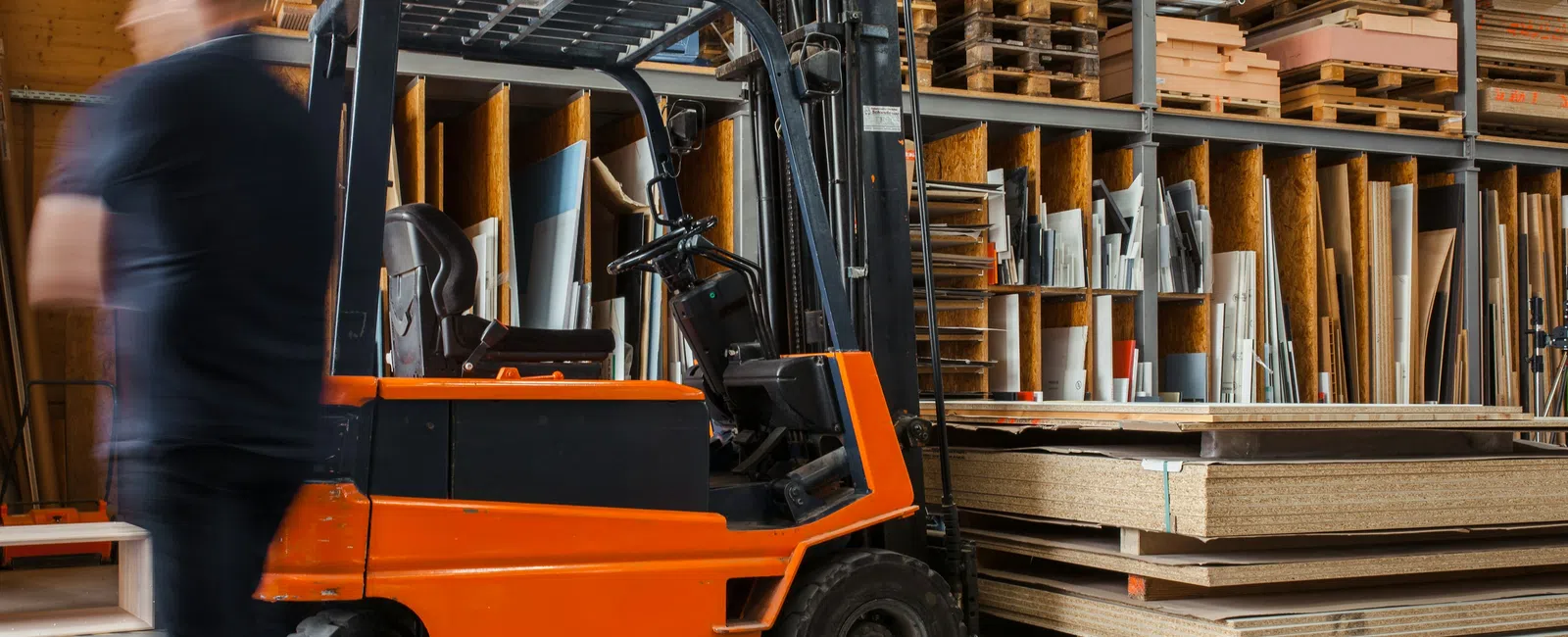
If you are not sure what is on your fleet, the quickest test is the tire itself. A press-on has a solid face with a visible steel band at the inside edge and no valve stem anywhere on the wheel. It sits on a smooth, flat wheel with no rim flanges. Cushion tire trucks, meaning most electric and internal combustion trucks built for indoor work, run them front and rear.
Pneumatic and solid pneumatic tires are a different mount entirely. Those seat on a multi-piece or split rim with a bead, and they come off with rim tools rather than a press. Solid pneumatics look like air tires and share the same size markings, but the process to change them is closer to standard tire work than to press-on work.
The sizes on a press-on are stamped on the band and read as three numbers, typically outside diameter by width by inside diameter. If we have those three numbers, the truck make and model, and whether the tire is smooth or traction tread, we can bring the right tire on the first trip.
What mobile press service looks like
The alternative to mobile service is taking the truck out of the building, loading it onto a trailer, hauling it to a shop that owns a press, and hauling it back. That is a day of downtime and a transport cost for a job that takes a fraction of the time.
Our trucks carry the press to you. The forklift stays on the floor it works on. A Pressman jacks the truck and cribs it, pulls the worn tires off the wheels with the press, seats the new ones, and sets the truck back down. Most single trucks are back in service the same visit.
A few things we handle as part of the visit rather than as extras:
- Wheel inspection while the tire is off, since band damage and seat wear are only visible then
- Matching tires across an axle so the truck is not running mismatched heights
- Removal and disposal of the worn tires under Georgia EPD regulations
Nothing is left in your yard, and you do not open a disposal account or call a hauler. The metal is recycled and the rubber becomes mulch for landscaping, playgrounds, and athletic fields.
When downtime matters more than the tire
For fleets running more than a few trucks, the wheel and assembly exchange program is usually the faster path. We press new tires onto spare wheels in advance, then swap complete assemblies on site. The press work happens off your clock. Truck downtime drops to the time it takes to change a wheel.
It also gives you a rotation. Wheels come back to us, get inspected and re-pressed, and go back into the pool for the next change. Fleets that run tight production schedules or that cannot pull a truck during a shift tend to end up here.
When press-ons are due
Press-on tires do not run to a tread depth number the way a truck tire does. A press-on with traction tread that has gone smooth is not automatically finished, and a smooth press-on never had tread to lose. What matters is how much rubber is left between the load and the steel band.
Retire a press-on at roughly two thirds of its original rubber height. Below that, the remaining rubber carries the same load through less material, so it runs hotter, and heat is what causes chunking and separation. Other signs worth pulling the truck for:
- Chunking, cracking, or missing sections at the edge of the tread face
- Rubber lifting or pulling away from the steel band at any point
- Flat spots, or a ride that has gone noticeably rougher on the same floor
If a tire has separated from its band, take the truck out of service rather than finishing the shift. That failure does not stay gradual, and it takes the wheel and often the hub with it when it goes.
Operators notice the ride before a supervisor notices the tire. If the truck is shaking on floor it used to cross smoothly, or a driver is complaining about the seat, look at the tires before you look at the suspension. Cushion trucks do not have much suspension. The tire is it.
Who we press for
A large share of our press work comes through equipment dealers, commercial tire shops, mechanics, and rental fleets that need press capability without owning a press. We work wholesale-direct on that channel, and the truck goes wherever you need it, including your customer's site.
Direct fleets get the same service. The difference is only who is on the invoice.
Getting it scheduled
We run mobile press service across metro Atlanta and out to a 100 mile radius from Doraville. Tell us the truck, the tire size off the band, and whether you need smooth or traction, and we will bring what fits.
See cushion and press-on tires, or if you are not sure what your fleet is running, a fleet tire assessment will sort it by truck. Call 770.446.6467 to get a truck out.