Cushion Forklift Tires
The indoor standard, pressed on-site.
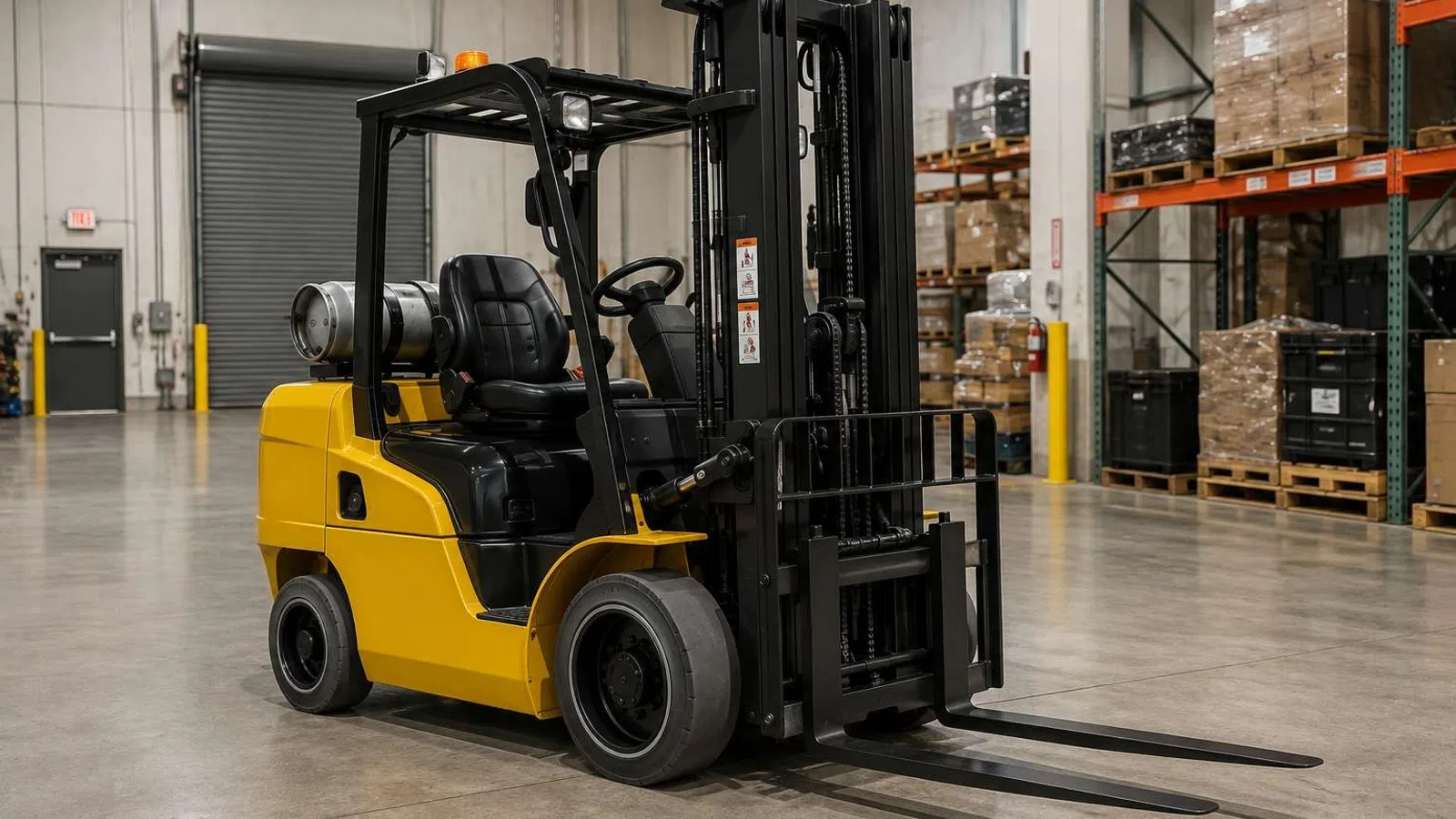
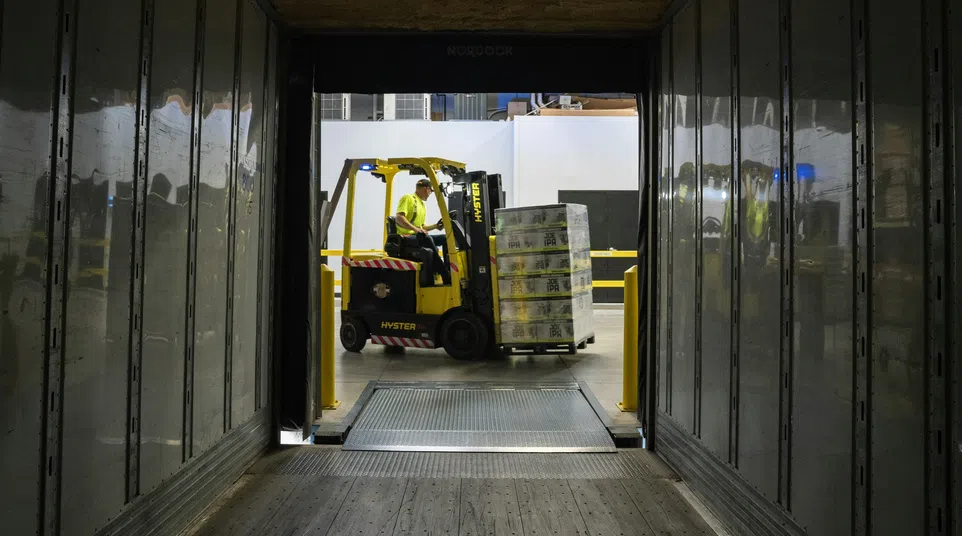
A cushion tire is a band of solid rubber bonded to a steel ring that presses onto the wheel, which is why it is called a press- on. It sits the truck low, turns tight, and is the standard fit for smooth indoor floors.
Size and Floor
WHERE CUSHION TIRES BELONG
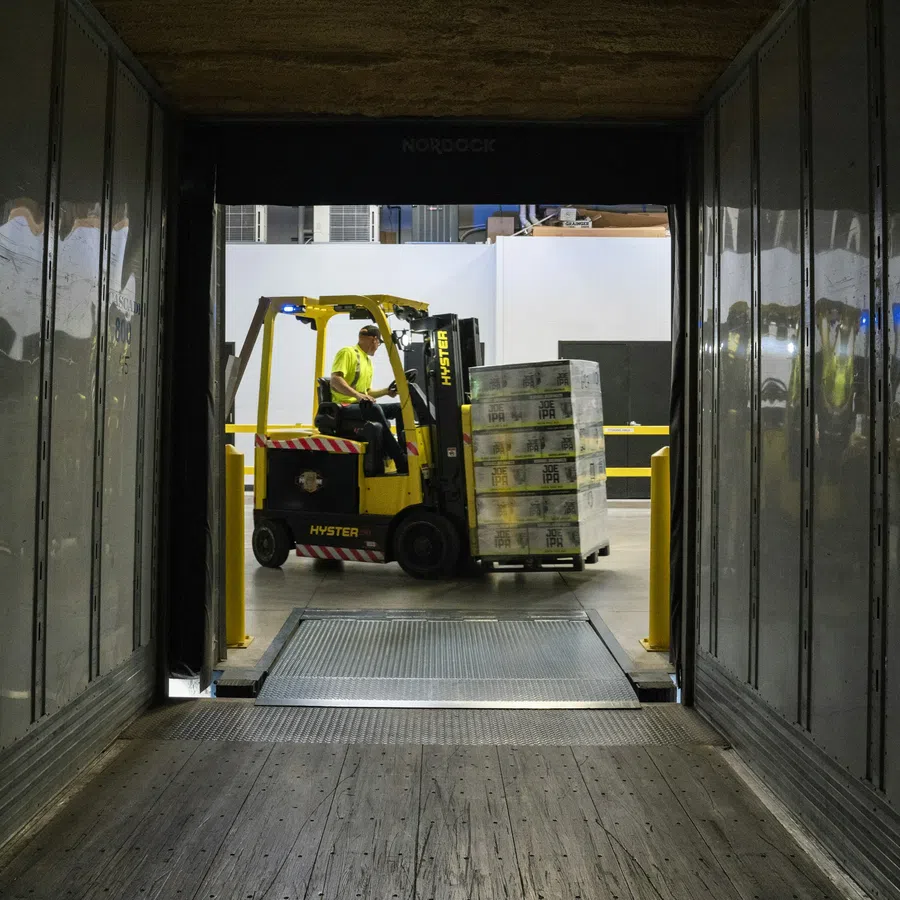
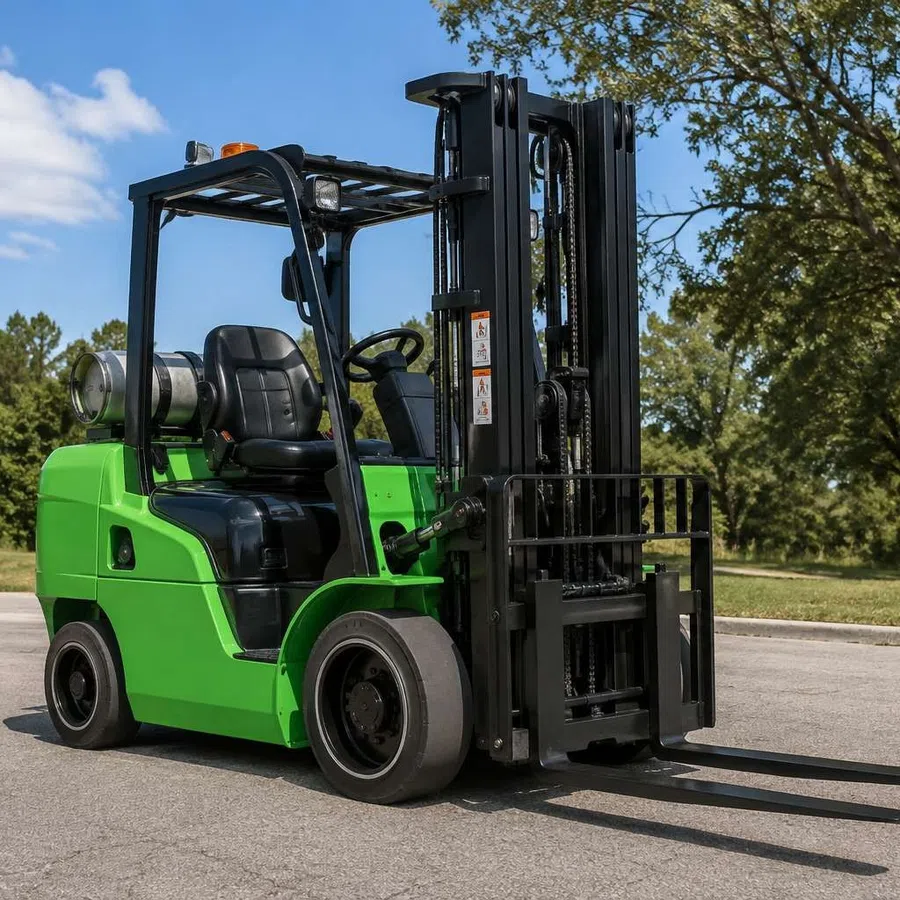
Different Work Environments
CUSHION TIRE SPECIFICATIONS
Compound and color options
Rubber Compound
Cushion tires use a Rubber Compound rated roughly 60 to 70 durometer, which is a measure of hardness. That range gives good shear resistance, load-bearing capability, and cut resistance for indoor duty. Higher durometer carries more load and rides firmer
Standard black and non-marking
WHY CUSHION TIRES NEED A PRESS
Install process
There is no rim to bolt
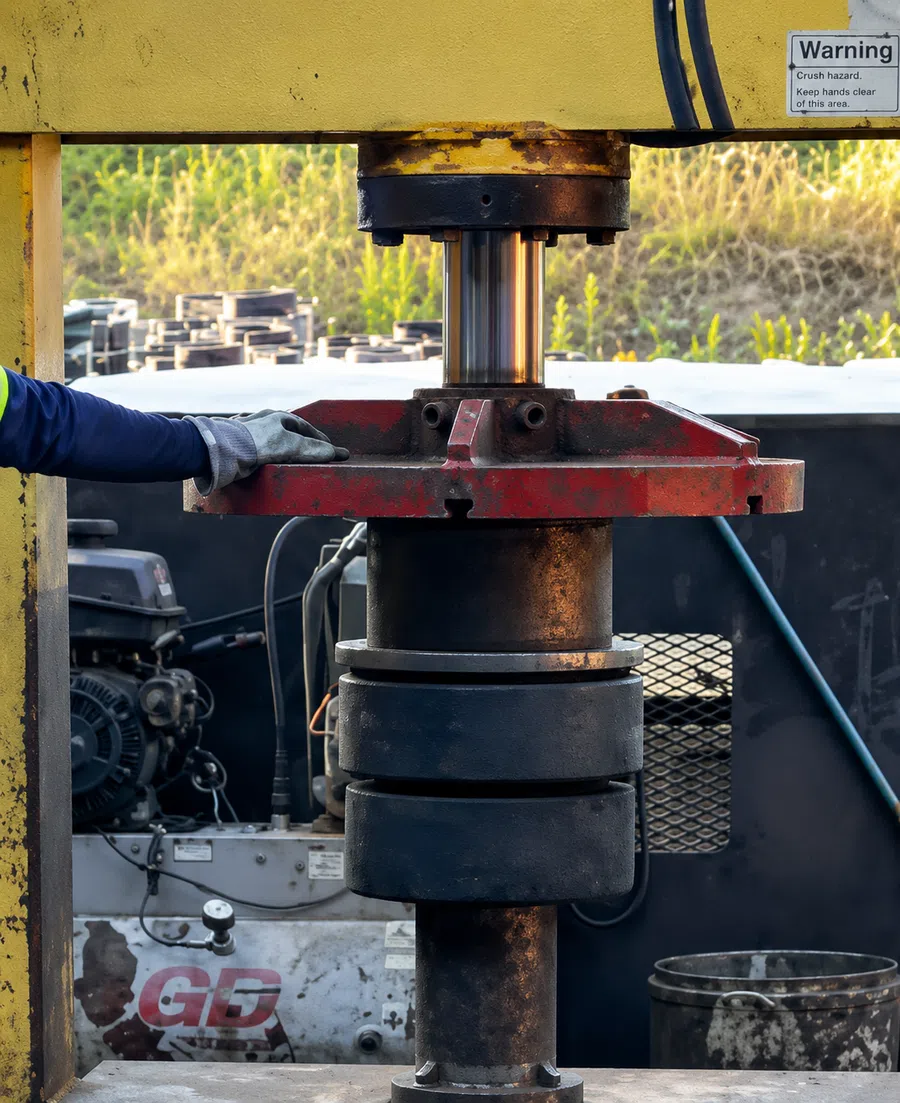
A cushion tire does not mount to a rim. It is pressed onto the wheel under several tons of hydraulic force, and comes off the same way. That press is standard in a tire shop and absent from almost every maintenance department, which is why cushion-tired forklifts traditionally get trailered out.We bring the press to you
Our trucks carry the hydraulic press, so tires get pressed on in your aisle and the forklift never leaves the building. Our Pressmen average ten years with us and complete a three-month apprenticeship before running a press alone. See on-site tire installation.THE HONEST TRADEOFF
What you give up for the low profile
Cushion tires ride harder than any other forklift tire. The operator feels every floor joint and every piece of debris, and over a shift that fatigue is real. They also have almost no traction on wet or loose surfaces. You accept that for a tight turning radius, a low load center, and a tire that cannot go flat. On the right floor it is a good trade, and we will tell you whether you have one.
CUSHION TIRE QUESTIONS WE HEAR MOST
FAQs
What is a cushion forklift tire?
A cushion forklift tire is a band of solid rubber bonded to a steel ring that presses onto the wheel. It contains no air and mounts without a rim. Cushion tires run low to the ground, turn tightly, and are the standard fit for forklifts working smooth indoor floors.
What is the difference between cushion and pneumatic forklift tires?
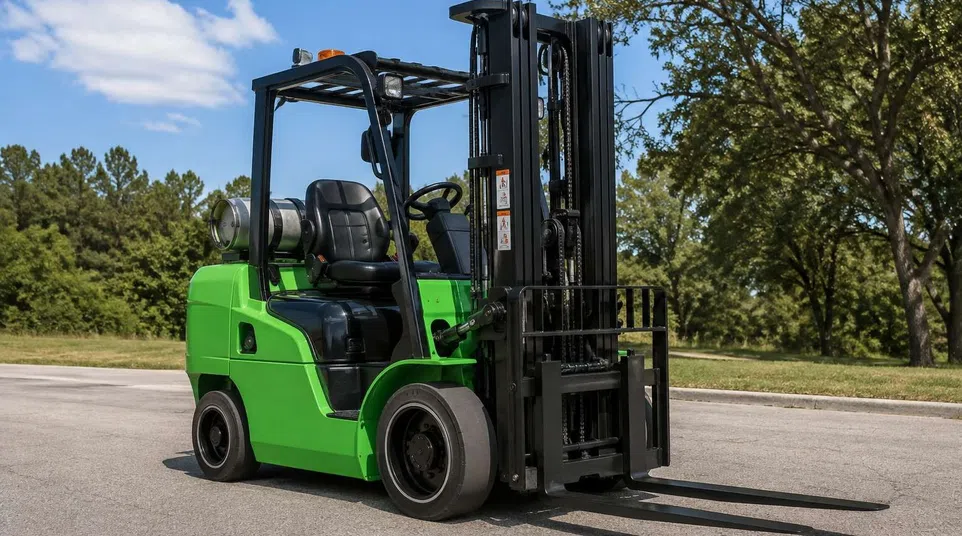
Cushion tires press onto the wheel and contain no air, sitting the truck low for tight indoor work. Pneumatic tires mount on a rim, hold air or foam fill, and have deeper tread and more ground clearance for outdoor surfaces. A cushion-tired forklift cannot safely work gravel or broken ground.
Are cushion tires good outdoors?
Cushion tires are built for smooth indoor floors and handle only light outdoor duty on clean, even surfaces. There is very little rubber between the wheel and the ground, so gravel, dirt, and broken pavement damage the tire and transmit shock into the truck. For regular outdoor work, use solid pneumatic or foam-filled tires.
Can cushion tires be non-marking?
Yes. Non-marking gray and white cushion tires use a compound without carbon black, so they do not streak sealed, coated, or inspected floors. They cost slightly more and wear slightly faster than standard black, which is the usual tradeoff for clean-floor facilities.
Do you need a press to change cushion tires?
Yes. Cushion tires are pressed onto the wheel under several tons of hydraulic force and cannot be changed with standard shop tools. Our installation trucks carry the press to your facility, so the forklift does not need to be trailered to a tire shop.