Polyurethane Forklift Tires
Built for electric lifts and heavy loads.
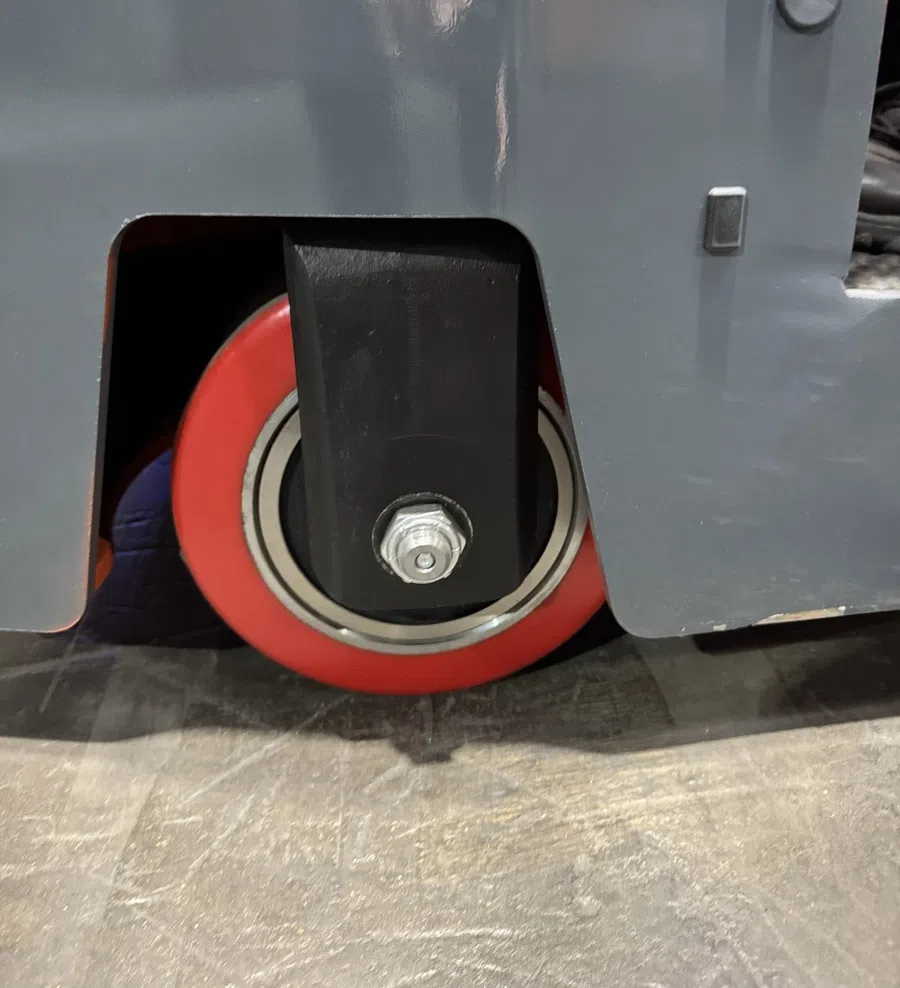
A polyurethane tire, or poly, is a press-on molded from polyurethane instead of rubber. At 80 to 95 durometer it carries more load on a smaller tire and rolls with less resistance, which means longer runtime on battery equipment. Every poly tire is non-marking.
Send a Photo
WHERE POLYS ARE THE STANDARD FIT
Shipping on poly.
Electric lifts and pallet trucks
Electric equipment lives and dies on battery draw. A poly tire's low rolling resistance means the motor works less to move the same load, which shows up as longer runtime between charges. This is why almost all walkies, pallet trucks, order pickers, and reach trucks ship on polyurethane.
High load on a small footprint
Polyurethane carries substantially more load per square inch than rubber. On equipment where the tire has to be small because the machine has to fit somewhere narrow, poly is often the only compound that will carry the rating. All poly tires are non-marking, since polyurethane contains no carbon black to begin with.
Poly Tire Tread
Sipe Tread Options
A tread pattern can be added to your poly tire to provide better grip without negatively impacting performance. Our manufacturer offers the following tread patterns to help maximize your forklift's performance in its unique environment:

Razor Sipe
Great for cold storage environments with damp floors and ramps

Grip Sipe
Great for cold storage environments with damp floors

Router Sipe
Great for cold storage environments with standing water

Diamond Sipe
Great for indoor environments with standing water
Durometer and color
Reading the existing tire.
Polyurethane compound
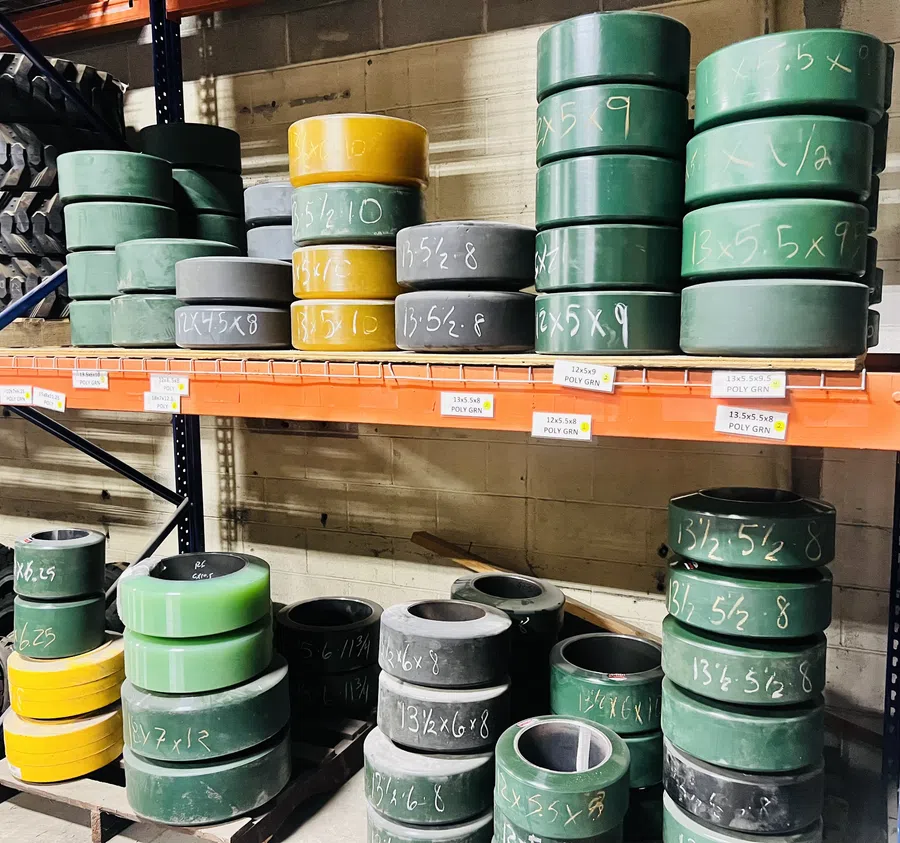
Polyurethane Compound runs roughly 80 to 95 durometer, compared with 60 to 70 for a Rubber Compound. Higher durometer means harder, which means more load capacity and less rolling resistance, and also less give over floor irregularities.
Color is a manufacturer's identifier
On polyurethane tires the color is how that manufacturer flags durometer or a specialised compound, and it is specific to them rather than an industry-wide scale rather than being a cosmetic choice. This matters when you are matching a replacement to what is already on the machine. If you are unsure, photograph the existing tire and send it over.
POLY TIRE QUESTIONS WE HEAR MOST
FAQs
What are polyurethane forklift tires?
Polyurethane forklift tires, or polys, are press-on tires moulded from polyurethane rather than rubber. They run 80 to 95 durometer, considerably harder than rubber, giving higher load capacity and lower rolling resistance. They are the standard fit on electric lifts, walkies, and pallet trucks.
What is the difference between poly and rubber forklift tires?
Poly tires run 80 to 95 durometer and rubber tires run 60 to 70, so polys are harder, carry more load, and roll with less resistance. Rubber gives better traction, absorbs more shock, and tolerates rougher surfaces. Poly is for smooth indoor floors only. Rubber handles a wider range of conditions.
Why do electric forklifts use poly tires?
Electric forklifts use poly tires because low rolling resistance reduces battery draw, which extends runtime between charges. A harder compound also lets the tire carry the machine's rating in a smaller footprint, which matters on narrow- aisle equipment where space is limited.
Can poly tires be used outdoors?
No. Polyurethane is too hard to absorb outdoor surface irregularities and has poor traction on wet or loose ground. Used outdoors, poly tires chunk and debond from the band quickly. For outdoor forklift work use solid pneumatic or foam-filled tires instead.