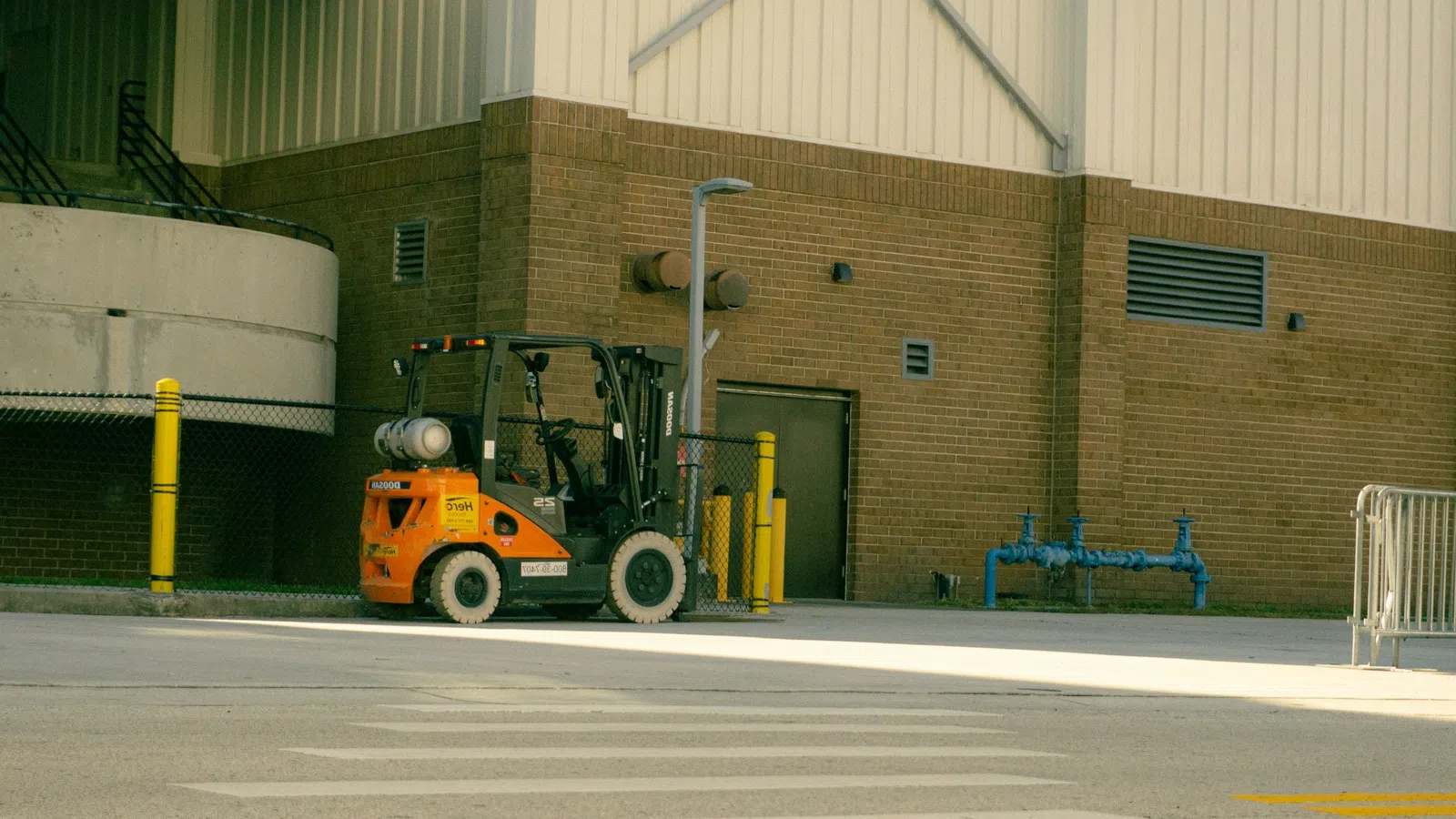
Orange forklift parked outside a brick industrial building near yellow safety posts and a street crosswalk.

Non-Marking Forklift Tires

No streaks on finished floors.

Non-marking tires use a carbon-black-free compound that prevents dark floor streaks while maintaining the same construction, load rating, and fitment. The compound is available in cushion, solid pneumatic, and poly tires.

Size and Finish

WHO NEEDS NON-MARKING TIRES

Floors where a black streak is a problem.

Orange forklift inside a spacious industrial warehouse with reflective polished floor and yellow safety railings.

Sealed and coated floors

Epoxy, urethane, and polished concrete floors show tire marks clearly and are expensive to refinish. Warehouses and distribution centers that have invested in floor coatings almost always specify non-marking equipment.

Workers sorting fish into orange crates at a processing facility with digital weight display overhead

Inspected and audited facilities

Food processing, pharmaceutical, cleanroom, and medical device facilities are inspected on floor condition. Black tire streaks are a finding waiting to happen. In these facilities non-marking is not a preference, it is a requirement.

Blue articulated boom lift inside a shopping mall extending to clean or maintain the glass ceiling skylight.

Retail, hospitality, and public-facing spaces

Anywhere customers see the floor: retail backrooms that open onto sales floors, event venues, hotels, hospitals, and airports. Scissor lifts and small forklifts working these spaces run non-marking as standard. See scissor lift tires.

AVAILABLE IN CUSHION, SOLID, AND POLY

Pick the tire type first, then the compound

Cushion press-on tires in non-marking are the most common indoor fit. Solid pneumatic tires in non-marking suit trucks that cross between a coated warehouse floor and a clean dock. Poly tires are non-marking by construction, all of them, and are standard on electric walkies and pallet trucks.

Choose the right compound

Gray, White, and Standard Black

Three compounds, and when each one is the right call.

Non-marking gray

Gray is the most common non-marking compound and the most forgiving in service. It hides dirt better than white and is the default we stock for most applications.

Non-marking white

White is specified where the facility wants visible confirmation the tire is non-marking, which is common in food and pharmaceutical environments. It shows dirt more readily than gray.

Standard black where floors allow

If your floors are bare concrete, uncoated, or outdoors, standard black is more durable and costs less. Not every facility needs a non-marking tire and we will not sell you one you do not need.

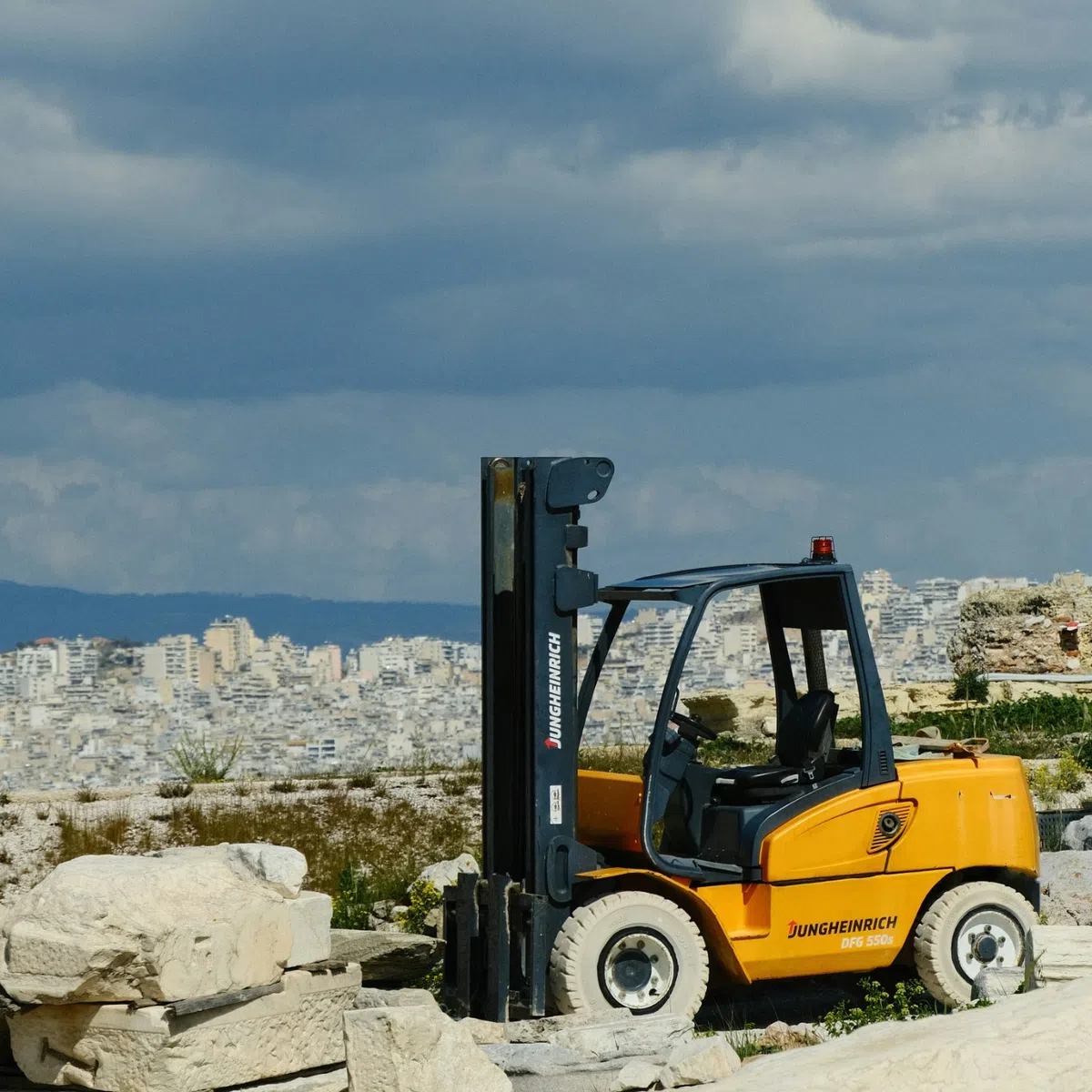
Yellow Jungheinrich forklift parked among large stone blocks with cityscape and cloudy sky in background

THE HONEST TRADEOFF

Slightly faster wear, slightly higher cost

Carbon black does more than color a tire. It adds abrasion resistance, which is why removing it costs some wear life. A non-marking tire typically wears somewhat faster than the same tire in standard black and costs a little more.

The gap matters less than it sounds, because non-marking tires run on smooth indoor floors where wear rates are low to begin with. Set against refinishing a coated floor or failing an inspection, it is rarely a close call.

Non-Marking Tire Questions We Hear Most

FAQs

What are non-marking tires?

Non-marking tires are made from a rubber compound that excludes carbon black, the additive that causes standard tires to leave dark streaks on finished floors. They are typically gray or white. Construction, load rating, and fitment are identical to the standard black version of the same tire.

Do non-marking tires wear out faster?

Non-marking tires typically wear somewhat faster than standard black because carbon black contributes abrasion resistance. The practical difference is smaller than it sounds, since non-marking tires are almost always used on smooth indoor floors where wear rates are low regardless of compound.

What is the difference between gray and white non-marking tires?

Gray and white non-marking tires use the same carbon-free compound and perform identically. Gray hides dirt better and is the more common choice. White is often specified in food and pharmaceutical facilities where visible confirmation that equipment is non-marking is part of the standard.

Can any forklift tire be non-marking?

Cushion press-on, solid pneumatic, and poly tires are all available in non-marking compounds. Choose the tire type based on the surface and duty cycle first, then specify non-marking as the compound. Poly tires are inherently non-marking in most compounds.

Do non-marking tires cost more?

Non-marking tires cost modestly more than the same tire in standard black. Against the cost of refinishing a coated floor or addressing a facility inspection finding, the difference is usually immaterial. Call 770.446.6467 for a wholesale quote on your size.
GET NON-MARKING TIRES QUOTED

Size, machine, and floor finish

Tell us the tire size, the equipment, and what your floors are finished with. We will spec the compound, quote it wholesale, and fit it on-site.