
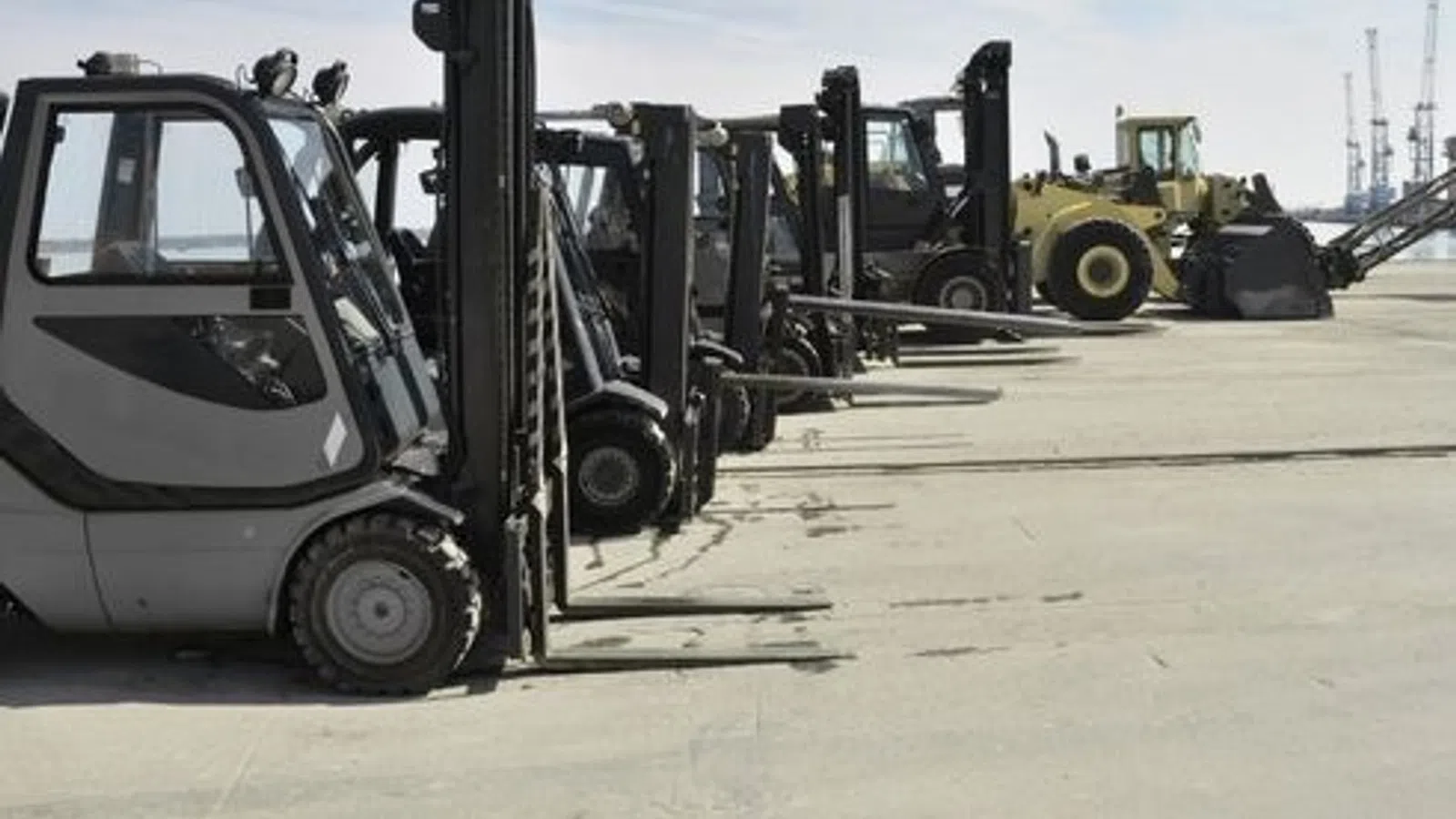
Row of parked forklifts and heavy construction equipment lined up on concrete near a port area.

Fleet Tire & Track Assessment

Know what's coming before it stops you.

A fleet assessment is a walk-through where we record the tire on every machine, how much life is left, and which units are close to stopping. You get a written replacement schedule you can budget against rather than react to.

Schedule Assessment

WHAT THE ASSESSMENT COVERS

Four things we record on every machine.

Two red and black forklifts parked side by side on gravel near a building with greenery in the background

What is actually fitted

We record the make, model, tire type, and size on every machine. Fleets are frequently running a mix nobody documented, including tires that were never the right specification for the application.

Close-up of black tire tread pattern with grooves showing detailed rubber texture on dark background

Remaining life on each tire

Each tire is measured against its 60J line and inspected for chunking, cracking, flat spots, and debonding. Machines get flagged as replace now, replace this quarter, or monitor.

Close-up of a worn red and blue forklift in an industrial workshop during repair or maintenance work

Whether the tire suits the application

This is where most of the value sits. A truck fitted with cushion tires that has been working a gravel yard for two years is burning tires that should be lasting. Correcting the specification saves more than negotiating the price does.

Row of white Bobcat S530 skid-steer loaders with red wheels parked outside a building under overcast sky

Standardisation opportunities

Fleets that consolidate onto fewer tire and wheel combinations buy better, hold less inventory, and become candidates for assembly exchange.

Your Fleet’s Tires Are a Cost Lever

Downtime is the real spend.

The tire is rarely the expensive part

The cost of a forklift tire is small next to the cost of the machine stopping, the operator idle, and the work behind it backing up. Managing tires by schedule rather than by failure is how that cost gets controlled, and it starts with knowing what you have.

Budgeting instead of reacting

Once you know which twelve machines need tires this year and roughly when, tire spend becomes a line item instead of a series of surprises. That is usually the outcome finance cares about more than unit price.

What You Get

Three deliverables, in writing.

A written record

Machine-by-machine listing of what is fitted, condition, and recommended action.

A prioritized replacement schedule

Grouped by urgency so you can sequence the work and batch our visits rather than calling us out one machine at a time.

A wholesale quote against the plan

Priced manufacturer-direct so the budget number is a real number.

Assessment Questions We Hear Most

FAQs

How much does a fleet tire assessment cost?

There is no charge. We walk the fleet, record the condition of every tire, and provide the findings and a replacement schedule. We do it because a fleet running the correct tires on a planned schedule is a better customer than one calling us in an emergency.

How long does an assessment take?

It depends on fleet size and how spread out the equipment is. A dozen forklifts in one building takes a couple of hours. A larger fleet across multiple sites may take a day or be split across visits. We will estimate when you call.

Do I have to buy anything?

No. The assessment stands on its own and the report is yours regardless. If the findings say your tires are fine, that is what the report will say.

Do you assess rubber tracks as well as tires?

Yes. Tracks are inspected for tread depth, cracking, edge damage, and idler and sprocket wear, since track failures are frequently caused by undercarriage condition rather than the track itself.

SCHEDULE A FLEET ASSESSMENT

Fleet size and location

Tell us roughly how many machines you run and where. We will schedule a walk-through around your operation