Solid Pneumatic Forklift Tires
The indoor-outdoor workhorse.
Size and Hours
BUILT FOR MIXED SURFACES
Where cushion stops and air fails
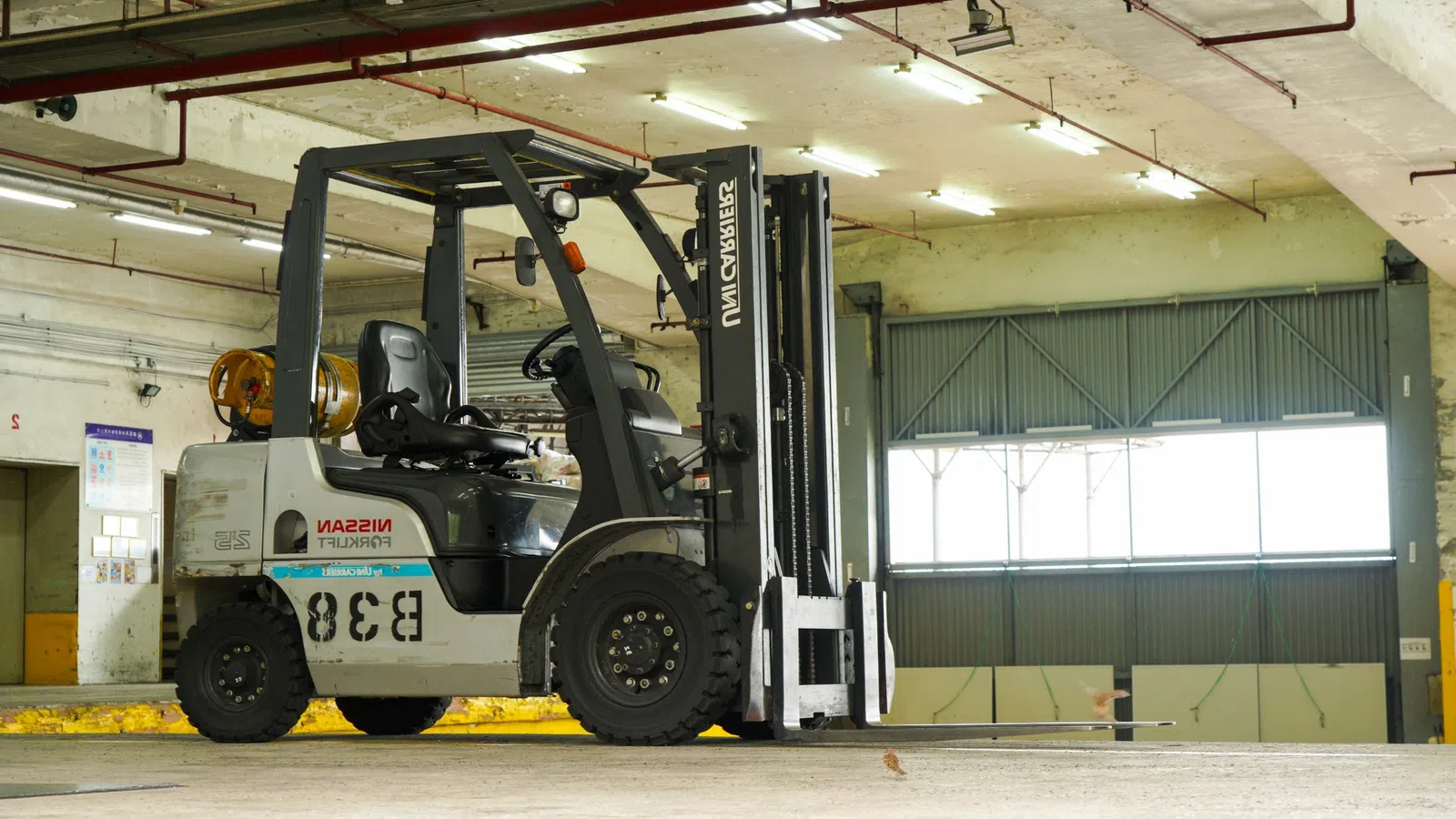
One tire for both sides of the door
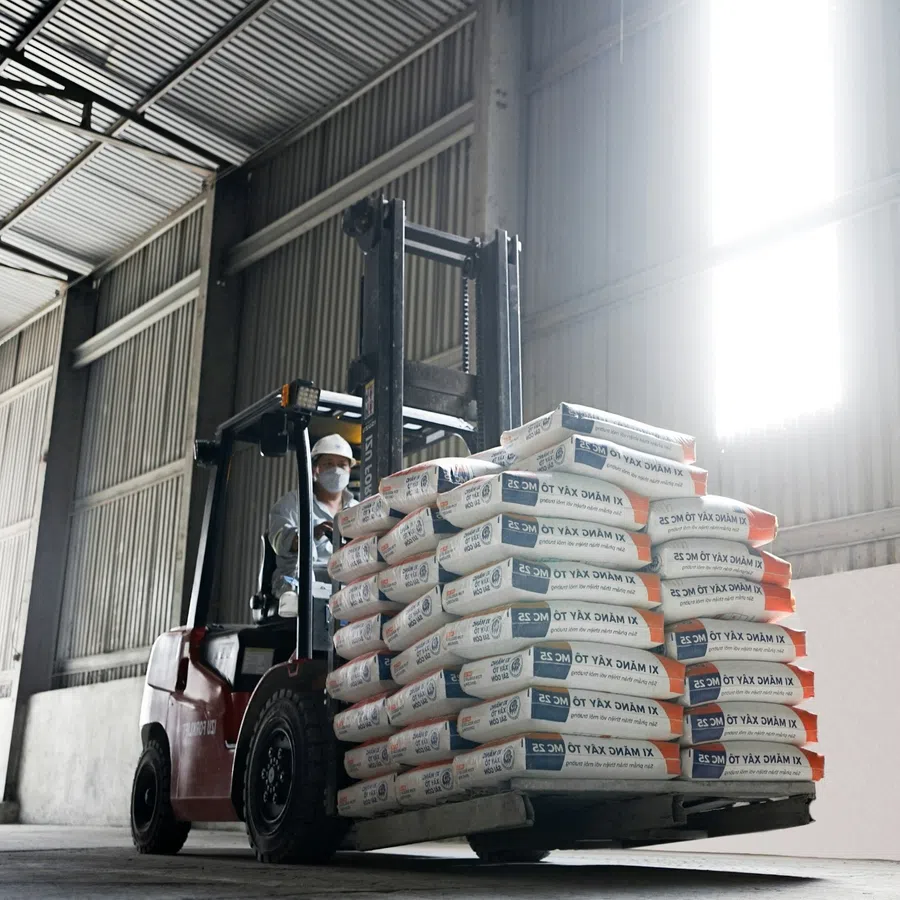
Most Georgia operations do not keep their forklifts strictly indoors. Trucks cross dock aprons, work yards, load from gravel, and come back inside. A cushion tire cannot do that and an air tire punctures. Solid pneumatic handles both, which is why it has become the default answer for mixed-duty fleets.
Real tread, real clearance
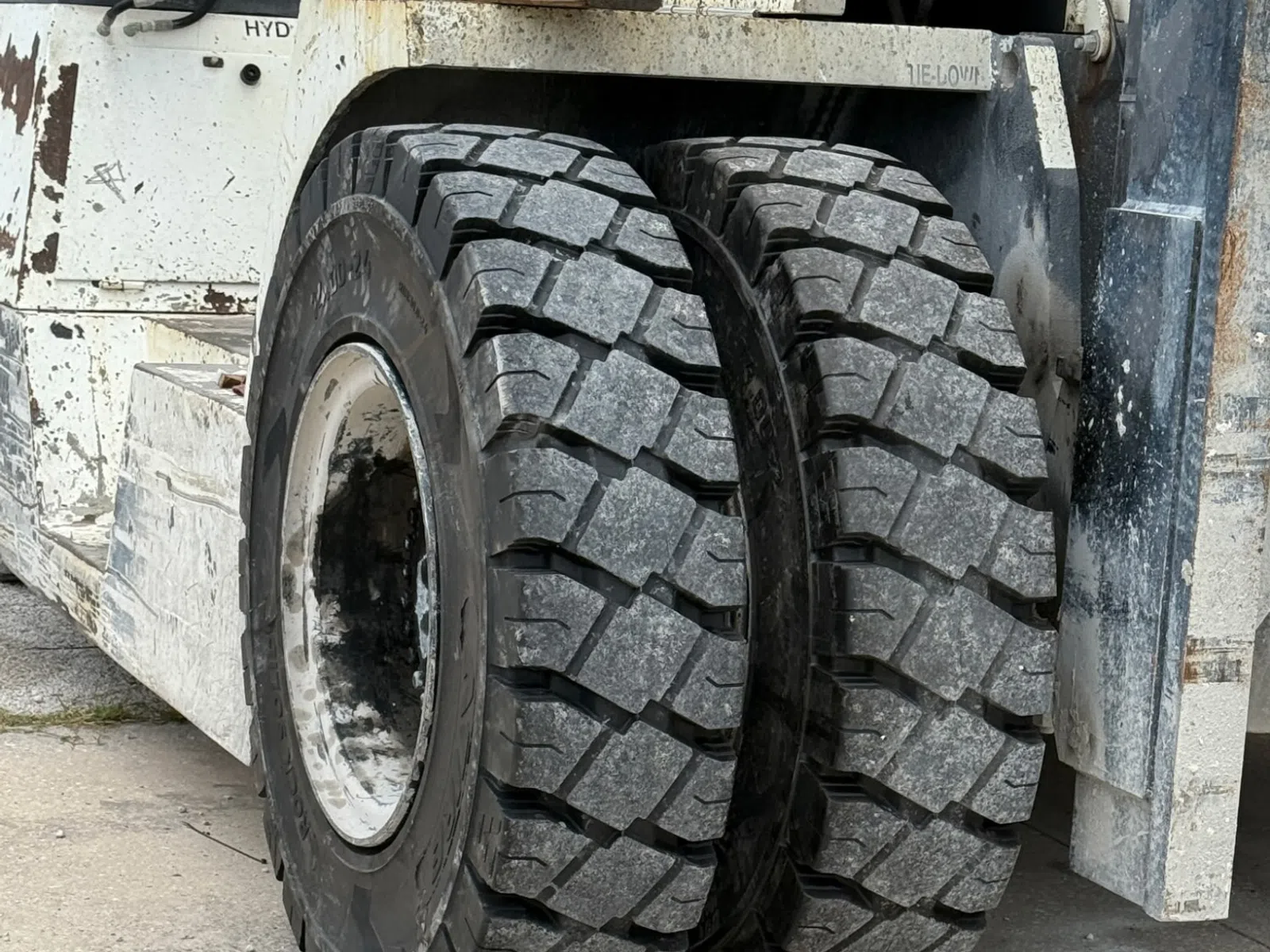
Unlike a cushion tire, a solid pneumatic carries a molded tread pattern and enough section height to absorb an expansion joint or a loading dock lip. That tread also gives it traction on wet concrete and light debris where a cushion tire simply slides.
SOLID PNEUMATIC SPECIFICATIONS
Compound and sizing
Solid pneumatic tires run a compound rated roughly 60 to 70 durometer for shear, load-bearing, and cut resistance, in standard black or non-marking.
Sizes read like air tire sizes, section width and rim diameter, for example 7.00-12 or 28x9-15, and they fit standard pneumatic rims, so a truck on air tires can move to solid without changing wheels. Check sizes on our forklift tire size chart.
THREE-STAGE CONSTRUCTION
Why it rides better than it should
How a solid pneumatic is built
A solid pneumatic is built in three bonded layers: a base that grips the rim, a softer middle compound doing the work an air chamber would, and a hard-wearing tread on top. That structure is why it rides considerably better than a cushion tire despite both being solid.
Aperture-hole variants
Some are molded with aperture holes through the sidewall that flex under load, softening the ride further and cutting weight. They cost more and trade a little load capacity for operator comfort, worth asking about on high-hour trucks.
SOLID PNEUMATIC TIRE QUESTIONS WE HEAR MOST
FAQs
What is a solid pneumatic tire?
A solid pneumatic tire is a forklift tire made entirely of solid rubber that mounts to a standard pneumatic rim. It has the tread depth and ground clearance of an air tire with no air inside, so it cannot puncture or go flat. It is also called a solid rubber tire or a resilient tire.
What is the difference between solid pneumatic and cushion tires?
Solid pneumatic tires mount to a pneumatic rim, carry deeper tread, and work both indoors and outdoors. Cushion tires press onto a smooth wheel with no rim, sit lower, turn tighter, and are limited to smooth indoor floors. A truck built for one cannot usually take the other without changing wheels.
How long do solid forklift tires last?
Solid forklift tires commonly run two to three times longer than an air tire in the same application, because they never lose pressure, deform, or puncture. Actual life depends on hours run, load carried, and floor condition. Rough or debris-heavy surfaces shorten the interval regardless of tire type.
Can I put solid tires on a forklift that has air tires?
Usually yes. Solid pneumatic tires are sized to fit standard pneumatic rims, so most trucks can convert without changing wheels. The main considerations are the added weight and confirming the load rating still matches the truck's data plate. Call 770.446.6467 with your make and model and we will confirm.
Are solid pneumatic tires the same as resilient tires?
Yes. Solid pneumatic, solid rubber, and resilient all describe the same tire: solid rubber construction on a pneumatic rim profile. Different manufacturers and dealers favour different names for the same product.