Industrial tire service in Gainesville, GA
Processing plants to warehouse floors
We supply and fit industrial tires across Gainesville and Hall County, from warehouse and distribution floors to the area's processing plants. Hall runs some of the hardest tire conditions in Georgia: wash-down chemistry, freezer cycling, and inspected product areas.
Start Here
Processing floors, freezers and yards
EQUIPMENT WE COVER IN HALL COUNTY
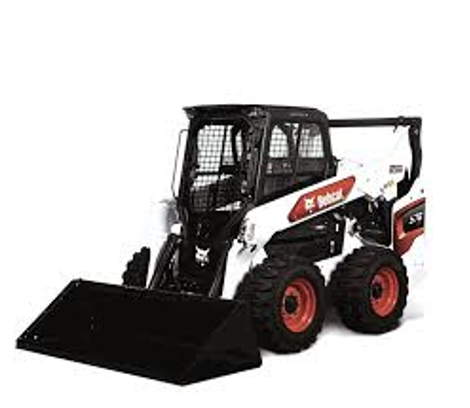
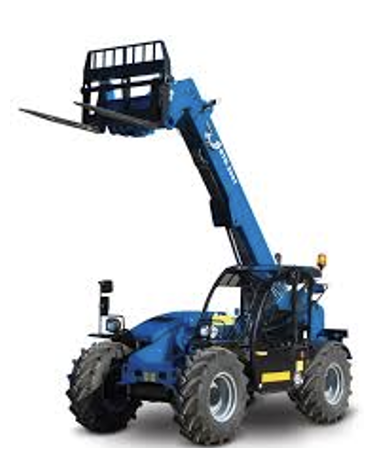
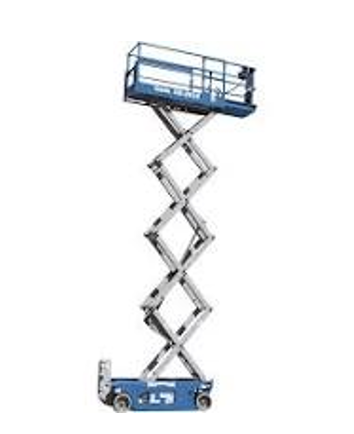
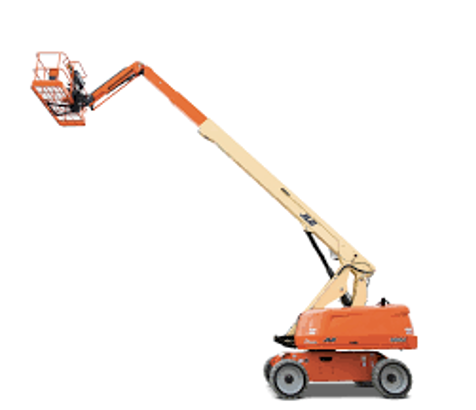
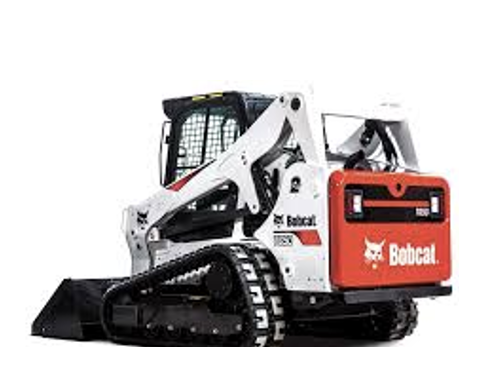
Forklift tires carry most of the Hall County work, specified for washdown chemistry and freezer cycling rather than pulled from a general catalog. Scissor and boom lift tires go to sanitation crews in non-marking compounds for USDA-inspected areas. Skid steer tires and telehandler work covers feed operations through Clermont, Lula, and Murrayville.
Sanitation chemistry attacks a standard compound
Chemical wear, not mechanical
What washdown actually does to a tire
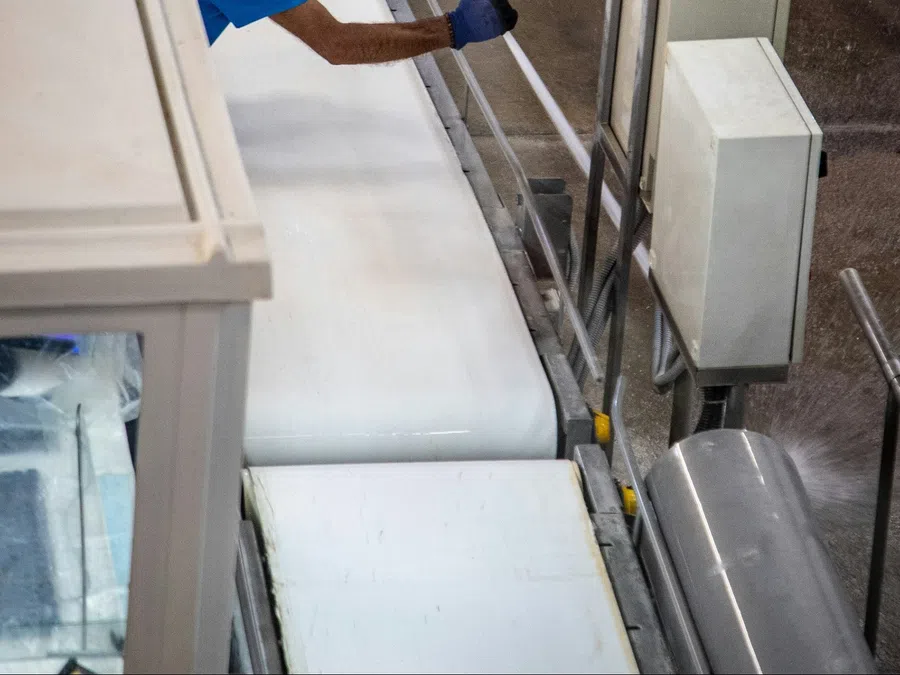
Sanitation cycles put caustics and chlorine on the floor at concentrations chosen to kill pathogens rather than spare rubber, degrading a standard compound from the surface inward and opening cracking that a dry floor would not produce for years.
Standing water compounds it
Processing floors do not dry between cycles, and a tire sitting in chemistry-laden water for hours absorbs more than one that gets rinsed and dried, with the bond between rubber and band showing it first.
What to specify instead
Tell us the sanitation chemistry your facility uses and we will specify against it, in chemical-resistant compounds and the non-marking tires and solid pneumatic tires stocked for product areas.
Service has to fit the sanitation window
The plant does not stop for tires
A processing plant runs production, then sanitation, then production again. There is no convenient hour in that cycle for a tire change, and a forklift down during production backs up the whole line behind it.
We schedule Hall County work around sanitation and production windows rather than around our own routing. Tell us when the floor is clear and that is when the truck arrives. It is a small thing that decides whether the work happens at all.
WHERE WE WORK IN HALL COUNTY
Areas we serve
Primary corridors
Atlanta Hwy, Hwy 365, Industrial Blvd, Queen City Pkwy, Athens St
Interstate
Also covered
Scheduling
SUB-AREAS WE WORK IN AND AROUND GAINESVILLE
On-Site Installation In Hall County
Fitted inside your window
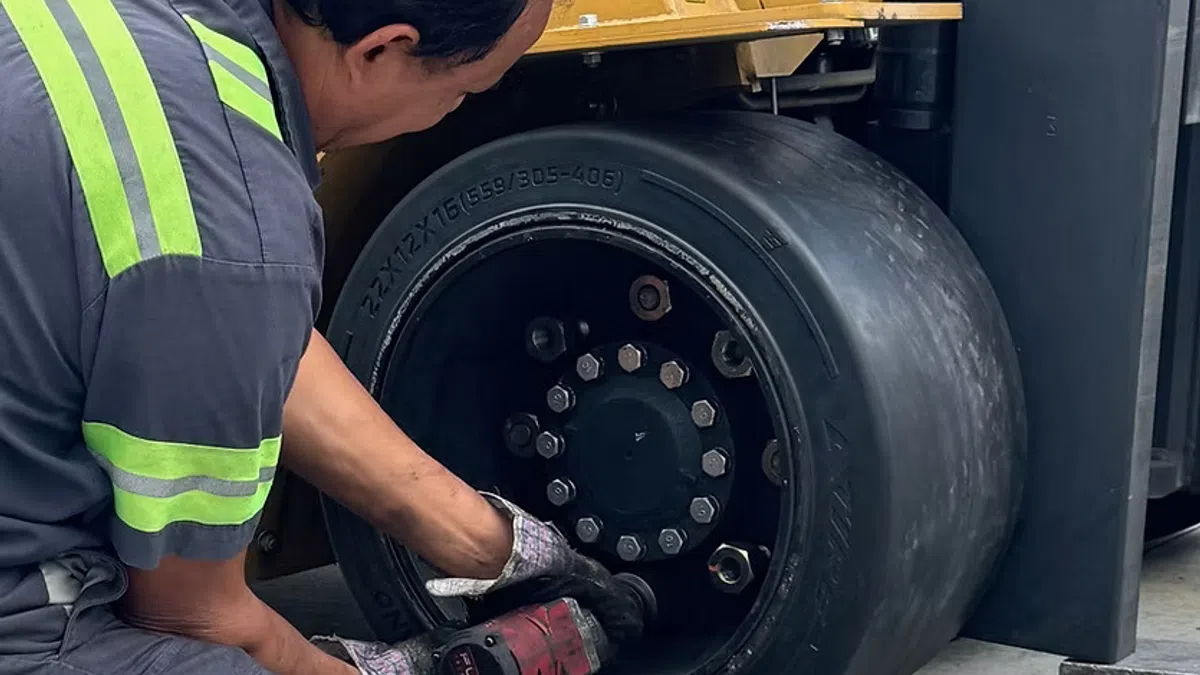
Our truck brings the press to your dock inside the window you give us, so the machine never leaves the plant and the work does not collide with production. See how on-site tire installation works.
Questions from Hall County fleets
What do washdown chemicals do to forklift tires?
Caustic and chlorine sanitation compounds degrade standard rubber from the surface inward, softening it and causing
cracking far earlier than a dry floor would. Standing water between cycles extends the exposure. Compounds selected for
chemical resistance hold up considerably better in processing environments.
Do USDA-inspected areas require non-marking tires?
Product-contact and inspected areas generally push toward non-marking compounds, because black tire marking on finished floors becomes an inspection issue. Non-marking is available in gray and white and we stock both for Hall County processing work.
Why do cold storage forklift tires fail early?
Mostly from temperature cycling rather than cold alone. A lift moving between freezer and dock many times a shift puts the bond between rubber and steel band through repeated expansion and contraction, which is why these tires often debond rather than simply wear out.
Can you work around our sanitation schedule?
Yes, and in Hall County it is how we schedule by default. Tell us when the floor is clear between production and sanitation and the truck arrives in that window. We schedule around the plant rather than around our routing
Do you cover Oakwood and Flowery Branch?
Yes, along with Lula, Clermont, Murrayville, and Braselton on the Hall side. We run I-985 regularly. Call 770.446.6467 with your address if you are near the county edge and we will confirm on the call.