Skid Steer and Construction Equipment Tires
No-flat uptime, fitted at your jobsite
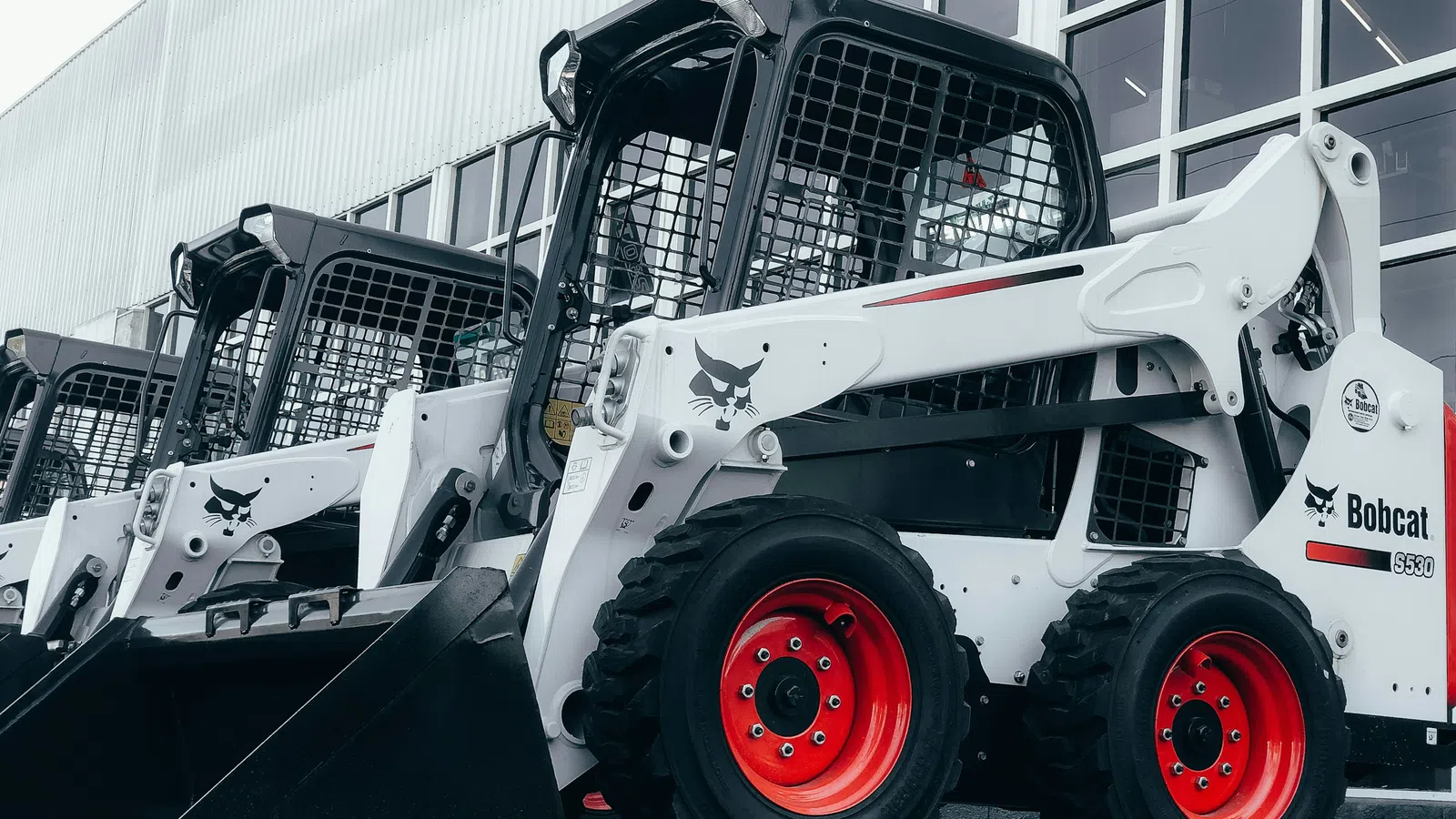
Skid steers, wheel loaders, and compact excavators run the same three tire builds: solid, foam-filled, and pneumatic. On machines that work broken ground all day, the choice comes down to what downtime costs when one goes flat. We fit all three at your yard.
Size and Ground
FITTED AT YOUR YARD OR JOBSITE
No trailering, no shop visit
Our trucks carry the press, the tools, and the common skid steer sizes, so the machine stays where it is working. Most sets are done in a single visit. When we are finished we haul the old tires away and dispose of them under Georgia EPD regulations. See how on-site tire installation works.
Skid Steer Tread Patterns
Common Treads
Directional tread
Directional tread runs an angled bar pattern that bites into loose ground and clears material as the wheel turns, giving the best traction in dirt, mud, and gravel at the cost of faster wear on pavement.
Non Directional Tread
Non-directional tread runs a tighter, more closed pattern built for concrete and asphalt with some light dirt, putting more rubber on the ground to spread the scrub load from skid-steering and lasting considerably longer on hard surfaces than a directional bar would.
Smooth Tread
Smooth tread is for machines that live on concrete or asphalt and never leave it, trading traction in anything loose for maximum contact patch and wear life. It is common on indoor and warehouse skid steers and on machines running attachments over finished surfaces.
Picking between them
Match the tread to where the machine spends most of its hours, not where it spends its hardest hours. A machine that is on concrete 80 percent of the time and gravel 20 percent should run non-directional, even though directional would perform better during that 20 percent.
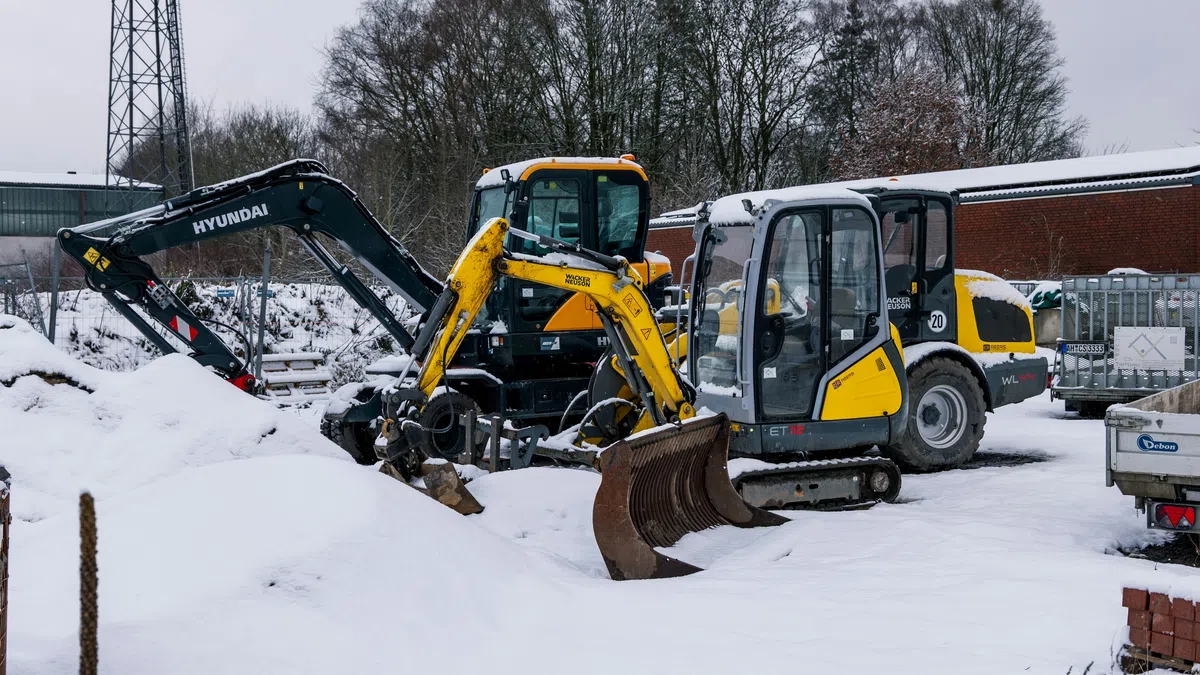

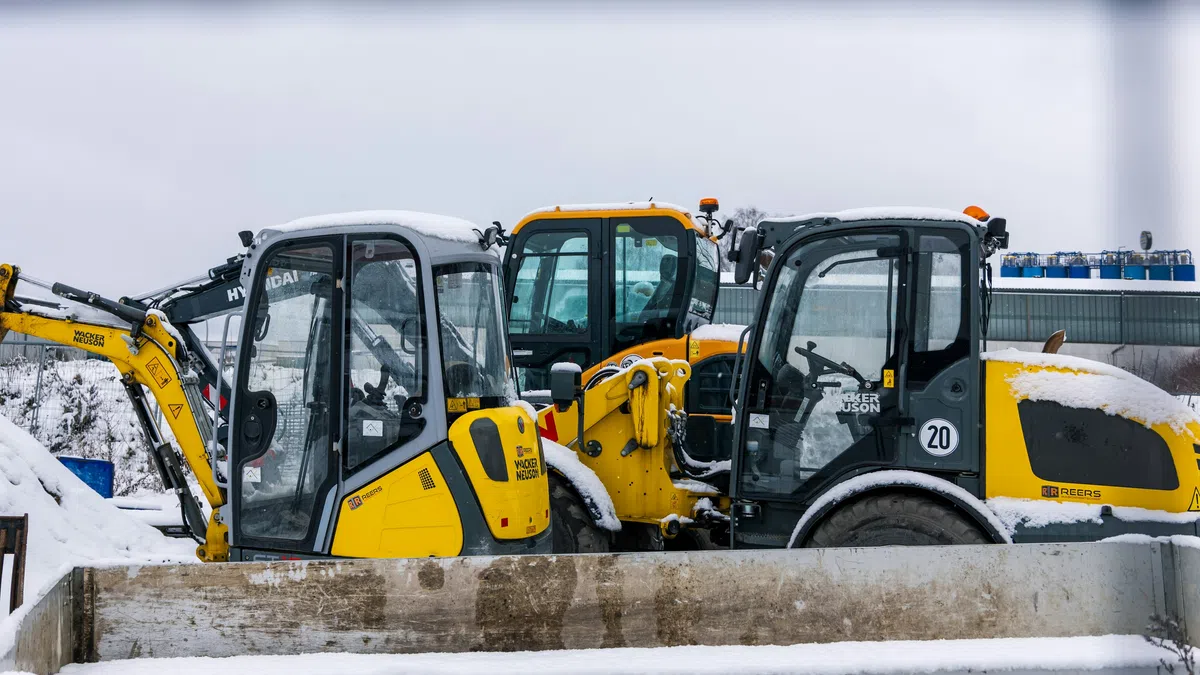
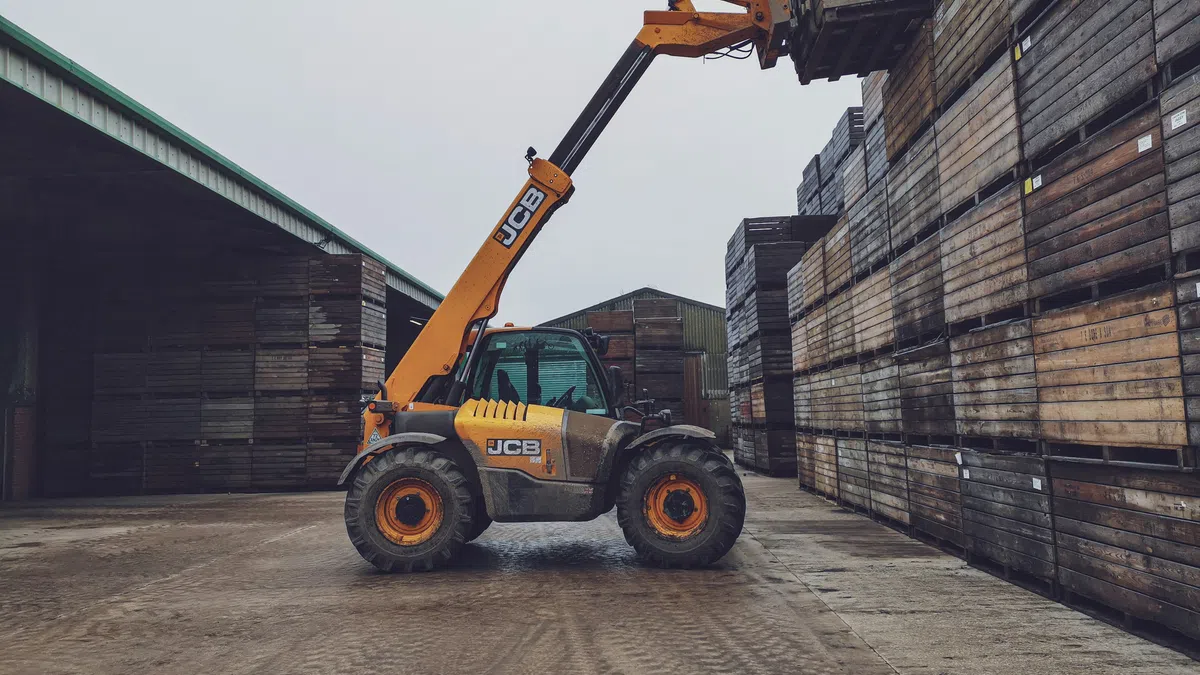
Tires for the Rest of the Construction Fleet
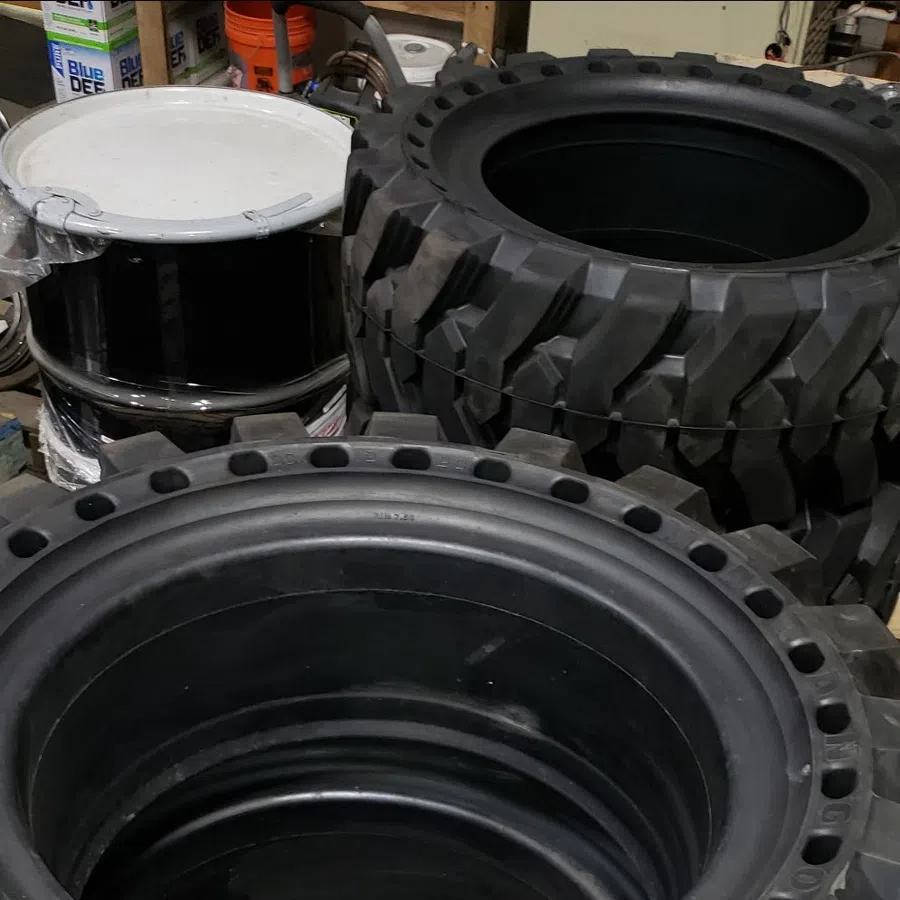
COMMON SKID STEER TIRE SIZES WE STOCK
Skid Steer/Construction Tires
The three sizes that cover most machines
10 x 16.5 • 12 x 16.5 • 14 x 17.5
These three cover the bulk of the skid steers working in Georgia. The size is printed on the tire sidewall. If yours is not listed, call 770.446.6467 with the make and model and we will source it.
Reading a skid steer tire size
A skid steer tire size reads as section width x rim diameter. In 12x16.5, the tire is 12 inches wide and mounts to a 16.5 inch rim. Solid and pneumatic tires in the same nominal size are not always interchangeable on the same rim, so confirm before ordering.
Skid Steer Tire Questions We Hear Most
FAQs
What are the best tires for a skid steer?
The best skid steer tire depends on the ground. Solid tires suit demolition, scrap, and recycling where punctures are constant. Foam-filled tires suit mixed construction ground where you want the original tread without the flats. Pneumatic tires suit soft ground and agricultural work where flotation matters more than puncture risk.
How long do skid steer tires last?
Skid steer tire life is usually measured in hours rather than years, and 600 to 1,200 hours is a common range for pneumatic tires on mixed ground. Solid tires commonly run several times that. Skid-steering scrubs tires sideways on every turn, so surface hardness affects wear more than load does.
Are solid skid steer tires worth it?
Solid skid steer tires are worth it when your downtime costs more than the price difference, which is usually true on demolition, scrap, and recycling sites. They cost more up front and ride firmer. On soft ground with low puncture risk, a pneumatic or foam-filled tire is the better value.
What is the difference between solid and foam-filled skid steer tires?
A solid tire is manufactured as one solid piece with no casing. A foam-filled tire is a standard pneumatic tire filled with polyurethane that cures solid. Both are flat-proof. Solid tires last longer and cost more. Foam-filled tires keep the original tread pattern and ride closer to an air tire.
What size tires does my skid steer take?
The size is printed on the tire sidewall and reads as width x rim diameter, such as 12x16.5. Most skid steers in Georgia run 10x16.5, 12x16.5, or 14x17.5. Call 770.446.6467 with your make and model if the sidewall is worn past reading.
Do you install skid steer tires on-site?
Yes. Our trucks carry the press, the tools, and the common skid steer sizes, so tires are fitted at your yard or jobsite. The machine does not need to be trailered anywhere and most sets are completed in one visit.